Build an agent in minutes, not hours.Make every enterprise system AI-enabled.
Start from 108+ prebuilt agents across HR, IT, Finance, Manufacturing, and Marketing. Connect to 200+ connectors & components, add your own custom skills, and deploy immediately - with governance and a full audit trail built in.
Nuroen is not another AI app — it is an enterprise ecosystem for building, governing, operating, and scaling autonomous AI systems across your organization.
One lifecycle. Two Interfaces.
Design and govern agents in the cloud. Collaborate and operate them from an agentic IDE workspace. Together they cover the full AI development lifecycle.
AI development lifecycle
Design
Visual agent workflows
Compose agents as typed node graphs in Studio — triggers, skills, connectors, and conditions on a governed canvas, with validation before anything ships.
Govern
Policies & compliance
Set autonomy levels, approval gates, RBAC, and usage policies centrally. Every run is policy-checked and recorded in a tamper-evident provenance chain.
Deploy
Secure production rollout
Publish immutable agent versions to production with hard blockers for missing credentials, triggers, or policy gaps — no silent auto-deploy.
Operate
Monitor & execute
Monitor live runs, review execution history, inspect outputs, and debug production workflows from a single operations surface in Studio.
Scale
Enterprise automation
Orchestrate multi-agent workflows, connect enterprise systems, reuse marketplace assets, and roll governed automation across teams and environments.
Choose your surface
When to use Web Platform vs IDE
Design and govern agents in the cloud. Collaborate and operate them from an agentic IDE workspace. Together they cover the full AI development lifecycle.
Web Platform
Your command center for enterprise AI agents
The centralized cloud platform where organizations design, manage, govern, deploy, and operate AI agents at scale.
Best for
Platform teams, AI builders, operations leaders, and enterprise architects
Lifecycle role
Build, govern, and operate agents in production
Builder
Governance
Operations
Skills & RAG
Connectors
Policies
Marketplace
IDE
The operating system for AI collaboration
An agentic IDE where humans and AI agents collaborate in real time — orchestrate parallel multi-agent workflows, manage multiple live sessions, and operate with persistent context across every project in Companion Mode.
Best for
Teams, operators, builders, and enterprise knowledge workers
Lifecycle role
Collaborate with agents and operate workflows locally
Companion
Operational
Secure Access
Web Platform
The centralized cloud platform where organizations design, manage, govern, deploy, and operate AI agents at scale.
Platform teams, AI builders, operations leaders, and enterprise architects
Build, govern, and operate agents in production
Agent Builder
Visual workspace for intelligent agents
Create intelligent agents without writing code. Describe what you need, refine the workflow on a visual canvas, connect knowledge and enterprise systems, validate every step, and deploy with governance built in.
Built for: Builders, automation engineers, and product teams
No code required
Govern by default
Production-ready from day one
Key capabilities
Natural language agent design
Visual workflow canvas
Enterprise system integration
Pre-deployment validation
Built-in governance
Agent orchestration
Multi-agent workflows
Complete audit visibility
Governance
Enterprise security and compliance layer
Set the rules once. Every agent action is policy-checked, supervised when needed, and recorded in a tamper-evident audit trail—enforced at runtime, not just in the interface.
Built for: Security teams, compliance officers, and IT administrators
Audit-ready by default
Policy-gated autonomy
Full traceability
Key capabilities
User management
Role-based permissions
Audit logs
Version management
Approval workflows
Enterprise compliance
Secure deployment controls
Access management
Operations
Centralized monitoring and execution
Monitor your entire AI agent fleet, trace every execution step-by-step, review outputs, and debug production workflows—all from one unified operations dashboard.
Built for: Operations teams, SREs, and platform administrators
Real-time visibility
Production-grade ops
End-to-end observability
Key capabilities
Monitor agents
Execution history
Performance analysis
Workflow observability
Usage monitoring
Execution status tracking
Output review
Production debugging
Skills & RAG
Your data. Your skills. Grounded answers.
Connect internal knowledge, build retrieval pipelines, and create reusable skills that improve reasoning across your entire agent fleet — grounded in your data, not generic model guesses.
Built for: Knowledge engineers, data teams, and AI practitioners
Grounded answers
Reusable intelligence
Semantic retrieval
Key capabilities
Knowledge sources
Retrieval pipelines
Reusable skills
Grounded intelligence
Semantic search
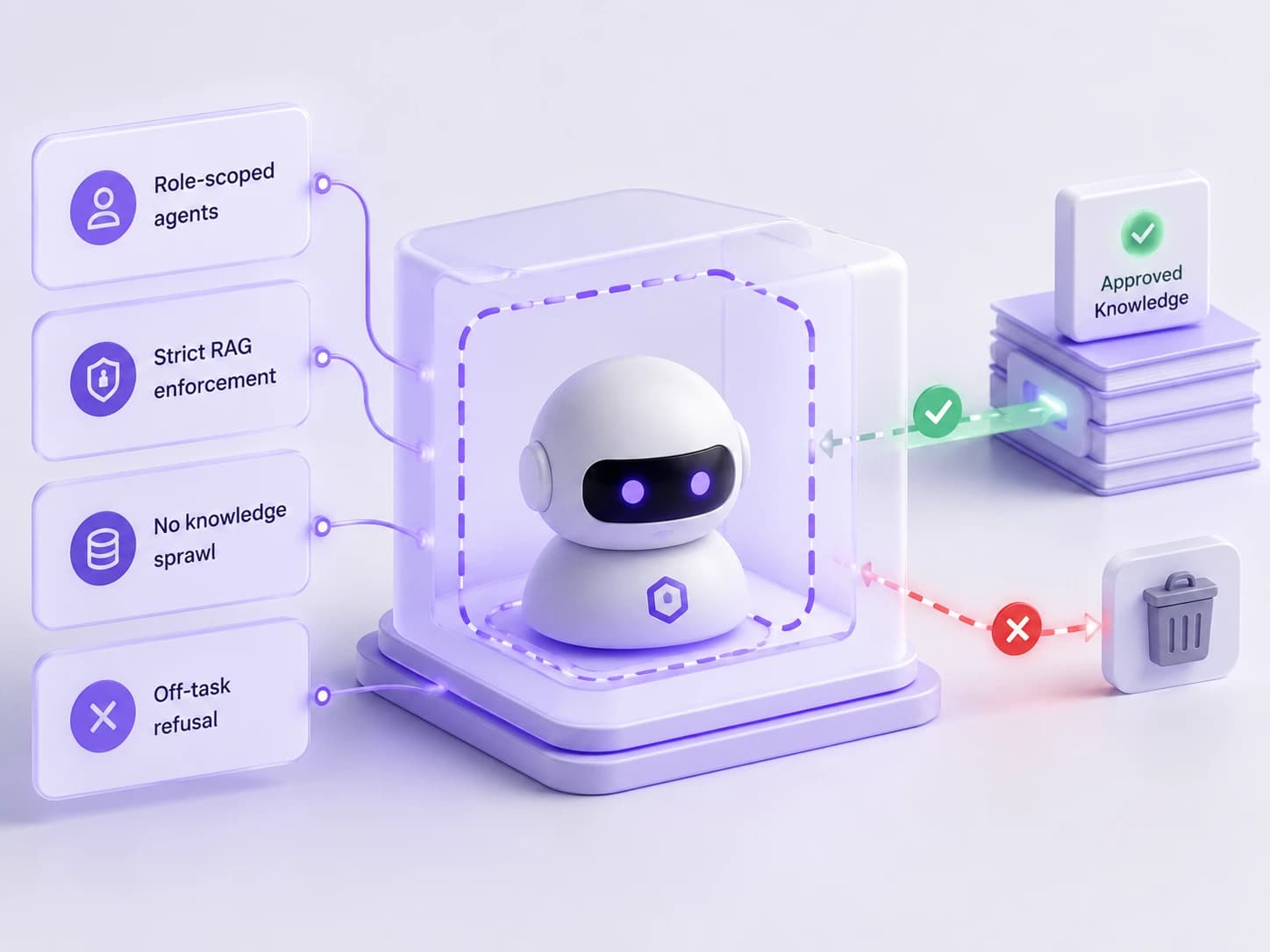
Strict RAG enforcement
Org-level assets
Source citations
Connectors
Seamless enterprise integrations
Connect agents to the systems your business runs on — databases, APIs, CRMs, productivity tools, and internal applications.
Built for: Integration engineers and enterprise architects
Enterprise-ready
Governed access
Real system actions
Key capabilities
Databases
APIs
CRMs
Productivity tools
Cloud storage
Business applications
Internal systems
Policies
Governed agent behavior framework
Set the rules for how AI agents behave—approval gates, scope limits, confidence thresholds, and compliance guardrails enforced on every action before it reaches production.
Built for: Security, compliance, and platform governance teams
Responsible AI
Runtime enforcement
Enterprise control
Key capabilities
Behavior rules
Execution policies
Model governance
Compliance packs
Runtime enforcement
Approval gates
Scope limits
Marketplace
Enterprise ecosystem for reusable AI assets
Browse 108+ prebuilt agents alongside reusable skills, workflow templates, connectors, and knowledge packs. Install in one click, customize on the canvas, and deploy with full enterprise governance.
Built for: Platform teams, builders, and enterprise architects accelerating AI adoption
Start from proven
Certified assets
Faster time to value
Key capabilities
108+ prebuilt agents
Reusable AI library
Certified enterprise assets
One-click installation
Visual canvas customization
Industry solution packs
Governed deployment
IDE
An agentic IDE where humans and AI agents collaborate in real time — orchestrate parallel multi-agent workflows, manage multiple live sessions, and operate with persistent context across every project in Companion Mode.
Teams, operators, builders, and enterprise knowledge workers
Collaborate with agents and operate workflows locally
Companion Mode
Multi-agent collaboration IDE for parallel AI workflows
Companion Mode is an agentic IDE workspace for multi-agent collaboration — run parallel AI agent sessions, assign specialized roles, co-work in real time, and keep building while agents execute research, planning, documentation, and analysis in the background.
Built for: Teams and individuals running multi-agent, multi-session IDE workflows
Parallel agent execution
Multi-session workspaces
Enterprise-scale collaboration
Key capabilities
Collaborate with multiple AI agents in one IDE
Manage parallel live project sessions
Co-work with intelligent agent teammates
Switch seamlessly between workspaces
Keep every agent synchronized to context
Execute objectives simultaneously
Persistent context per session
Intelligent multi-agent task orchestration
Operational Mode
Local file automation with zero-trust sandbox execution
Operational Mode is the intelligent execution engine of Nuroen IDE. Securely mount a local project folder, let AI agents analyze contents and propose file operations, preview every change, approve only what you trust, execute atomically inside a zero-trust sandbox, and retain a cryptographically verifiable audit trail.
Built for: Project managers and teams automating local file workflows under human control
Mounted folders only
Human approval gate
Atomic & reversible
Key capabilities
Mount project folders with scoped access
File Access Adapter zero-trust validation
Dry-run preview before every write
Human approval before permanent changes
Atomic batch execution with rollback
Shadow backup and Agent Trash
Tamper-evident cryptographic audit ledger
Time Machine, two-key deletion, threat detection
Secure Workspace Access
User-controlled local environment access
Agents interact with your local development environment only when you explicitly grant permission. You choose folders, revoke access anytime, and remain in complete control.
Built for: Developers requiring secure local AI assistance
Privacy-first
Transparent permissions
Revocable access
Key capabilities
Explicit permission required
User-selected folders only
No automatic access
Complete user control
Revoke access anytime
Authorized workspace only
Read project structures
Modify authorized files
Nuroen combines a governed Web Platform for building and operating enterprise AI agents with an agentic IDE featuring Companion Mode for multi-agent collaboration — covering design, governance, deployment, parallel workflows, and scale in one cohesive ecosystem.
Platform Overview
The complete Agentic AI platform
Nuroen combines a governed Web Platform for building and operating enterprise AI agents with an agentic IDE featuring Companion Mode for multi-agent collaboration — covering design, governance, deployment, parallel workflows, and scale in one cohesive ecosystem.
The Enterprise Operating System for Governed AI Agents
Modern enterprises no longer evaluate AI based solely on intelligence—they evaluate it based on control, governance, predictable costs, compliance, and trust. Nuroen was built for that reality. Every agent runs inside policy boundaries, every action leaves evidence, and every token spend is accounted for before execution—not after the invoice arrives.
Safe by Default beats Safe by Configuration.
Three forces blocking safe AI adoption
Runaway AI Costs
Uncontrolled token spend turns pilots into budget surprises—often discovered only when finance reviews the bill.
Shadow AI
When approved tools feel slow, teams reach for public chatbots—and sensitive data leaves systems you can audit.
Compliance Pressure
Auditors want proof—not prompts. Who approved an action, what data was used, and whether policy held at runtime.
Finance
Predictable spend with ceilings—not surprise invoices.
Security
One governed surface—not shadow tools leaking data.
Legal & Audit
Evidence and approvals—not "trust the prompt."
Costs spiral after the pilot
Production agents retry loops and premium models with no shared budget—finance finds out when invoices land.
Example: A support agent retries a failing API overnight, burning frontier-model tokens with no ceiling or alert.
Ungoverned tools spread fast
Blocked or slow approved tools push teams to consumer chatbots and extensions outside your perimeter.
Example: An analyst pastes a confidential contract into a public chatbot—outside retention, DLP, and audit.
Auditors ask harder questions
"We prompt carefully" is not enough—they need proof that policy was enforced at execution time.
Example: An agent triggers a workflow; auditors ask who authorized it and what evidence chain exists.
Prototypes ship fast. Scaling fails on spend, perimeter, and proof—the three pressures below show up in every serious AI program.
Cost overruns fund workarounds. Workarounds create audit gaps. Nuroen enforces economics, perimeter, and proof at runtime.
PHILOSOPHY
Safe by Default
A protected AI core surrounded by policy layers. Governance, cost control, and trust are enforced at runtime—not bolted on after agents reach production.
Runtime Protection
The inner ring is the last line of defense before model inference. Policy evaluation, scope checks, and safe defaults run on every request—builders cannot disable them from the canvas.
Governance Layer
The governance ring adds human oversight and compliance boundaries. High-impact actions pause for approval; every decision is recorded in an evidence chain auditors can verify.
Enterprise Perimeter
The outer ring protects the organization’s economics and security posture. Budget ceilings, knowledge boundaries, and enterprise controls wrap every production workload.
Why “Safe by Default” matters
Safe by Default (Nuroen)
Policies, approvals, budgets, and audit trails are on from the first run. Risky actions are blocked or paused before execution—not discovered in a post-incident review.
Safe by Configuration (typical tools)
Teams opt into guardrails per project or prompt. Coverage gaps appear when settings drift, agents bypass the UI, or new users ship without enabling controls.
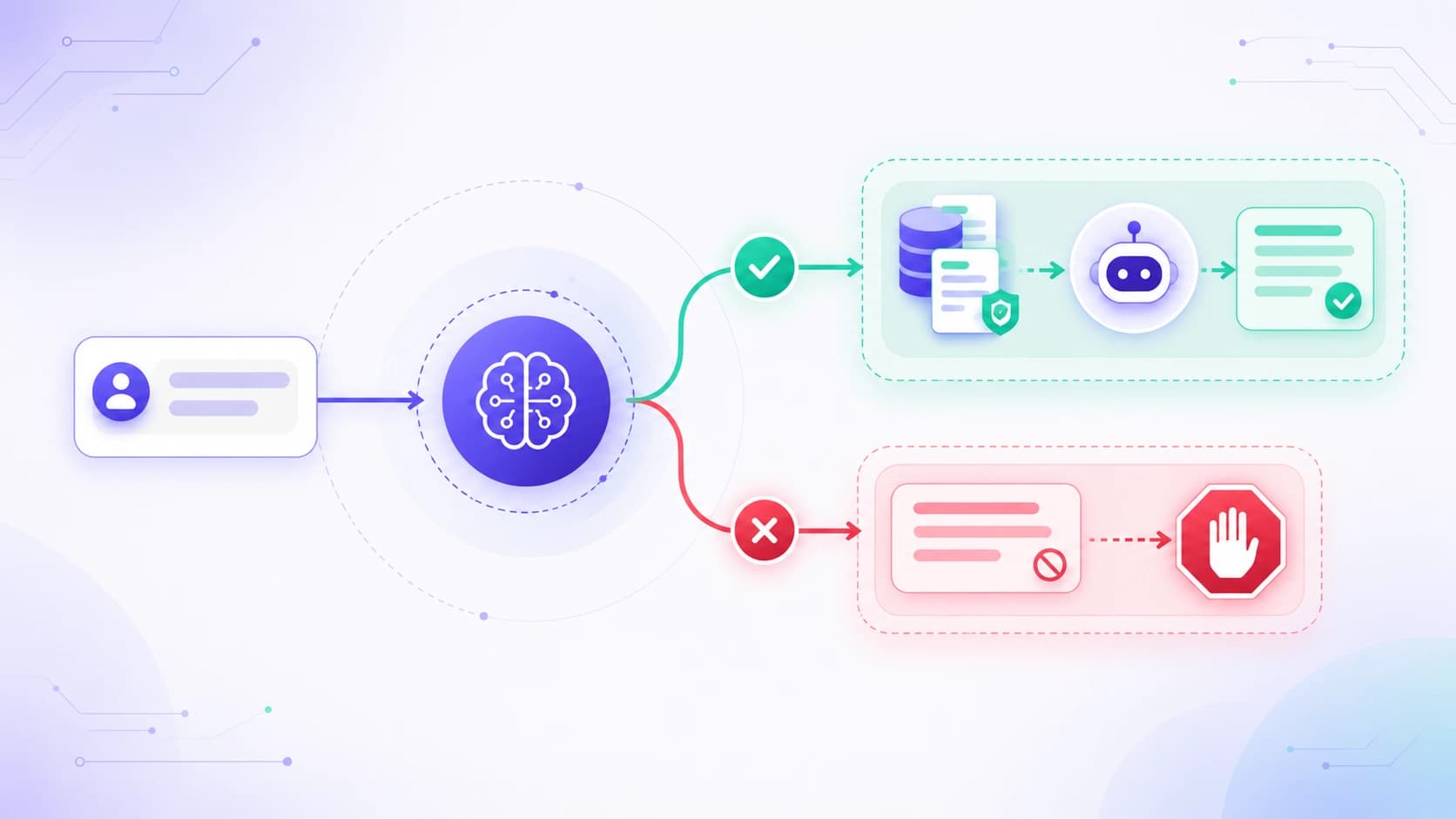
Nothing executes outside policy—declines happen at zero tokens when input is off-task or out of scope.
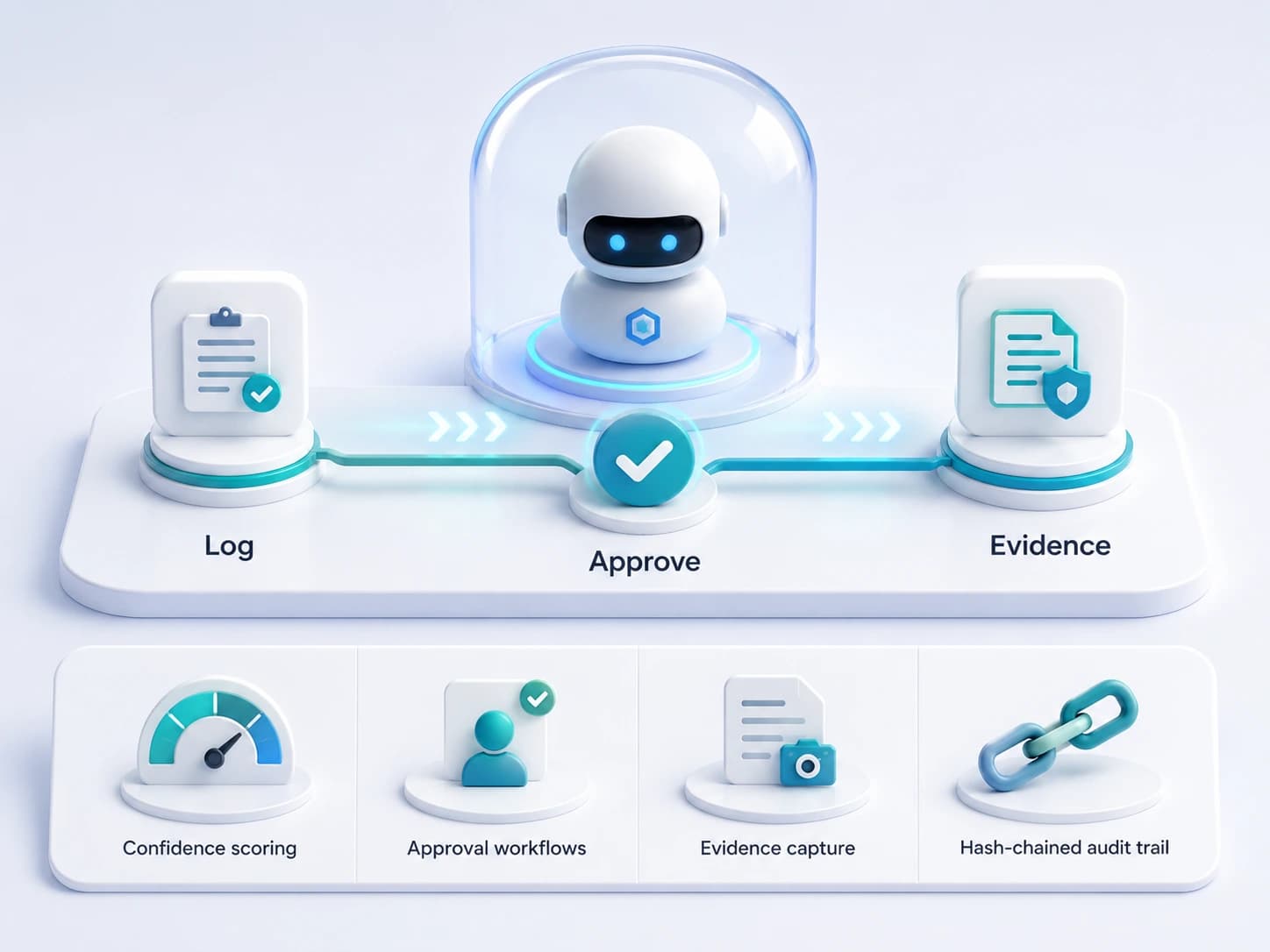
Every run produces evidence: confidence scores, approvals, and a tamper-evident audit chain.
Spend and scope are gated pre-call—finance and security teams get predictability, not surprises.
Governance that runs at execution time
Agents are Bounded
Every agent operates within role-scoped boundaries. Strict RAG prevents knowledge sprawl. Off-task reasoning is declined before tokens are spent.
Agents are Auditable
Confidence scores, approval gates, and tamper-evident audit trails accompany every agent decision. Compliance teams get proof, not promises.
Agents are Cost Controlled
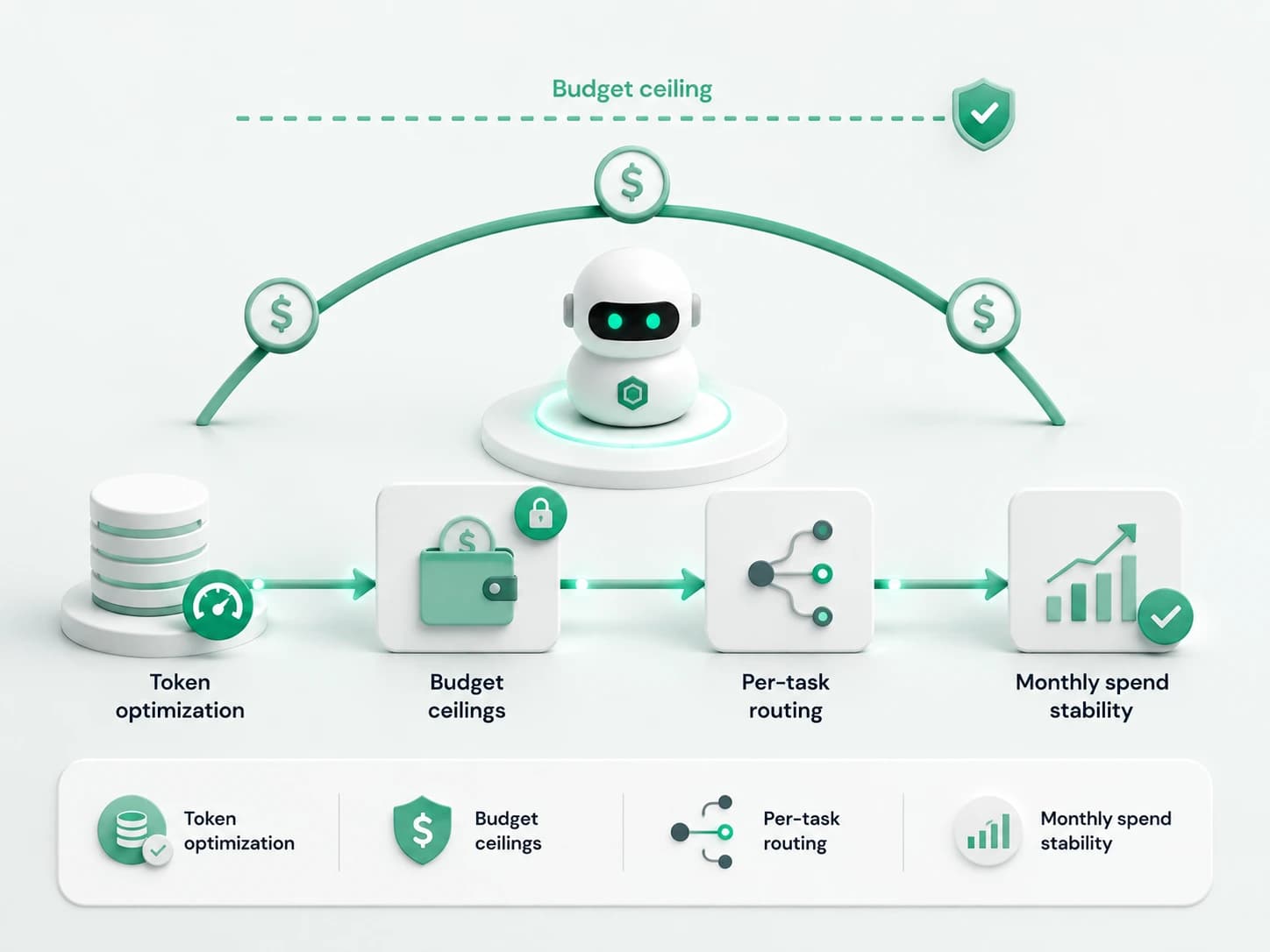
Token optimization, budget ceilings, and intelligent model routing keep monthly spend stable—even as agent usage scales across the organization.
The security pipeline before every action
Every agent run passes through a governed pipeline—not a suggestion layer. Each stage must clear before the next activates.
Stage 1
Scope
Before any model call, the pipeline classifies intent and enforces task boundaries. It decides whether the request belongs to this agent's remit, uses approved knowledge sources, and stays within the boundaries your team defined at build time.
Stage 2
Confidence
Every candidate response is scored against retrieved evidence and grounding quality. The pipeline measures how well the output is supported by trusted sources before anything reaches a user, connector, or downstream system.
Stage 3
Policy
Governance rules are evaluated against the planned action—not configured once and forgotten. Autonomy level, blast radius, data residency, and organizational policy all must pass before execution is allowed to proceed.
Stage 4
Approval
High-impact or high-risk actions are routed to designated approvers before anything executes. The pipeline holds the run in a pending state until an authorized person confirms—or explicitly rejects—the proposed action.
Stage 5
Budget
Credit balance and per-task budget limits are verified before execution begins—not reconciled after the fact. The pipeline knows what a run is allowed to cost and stops before spend crosses the line your finance team set.
Stage 6
Execute
Only after every prior stage clears does the governed action run—with scoped credentials, approved connectors, and the exact permissions this task requires. Nothing executes with broader access than the pipeline authorized.
Stage 7
Audit
After every action, tamper-evident provenance is appended to a hash-chained ledger. Each record links to the prior entry so finance, security, and legal teams can verify the chain was not altered after the fact.
AGENT CREATION
Gated build philosophy—no shortcuts to production
Deploy is hard-blocked on zero blockers. Natural language starts the journey; validation and governance finish it.
Step 1
Define
Describe the outcome in natural language—no canvas required to start.
Step 2
Confirm
Review the generated specification before any build begins.
Step 3
Validate
Automated validation catches blockers before deployment.
Step 4
Build
Generate the governed canvas and deploy with full audit readiness.
ENTERPRISE STUDIO
One Studio, Every Way to Build
From conversational authoring to professional IDE workflows—every path converges on the same governed artifact.
Node-based editing with typed edges and live validation.
Professional IDE
Power-user tooling with Companion Mode and parallel workflows.
Dynamic Skilling
Attach skills and RAG sources with strict scope enforcement.
Marketplace
Certified agents and components with governance metadata.
SOVEREIGN INTELLIGENCE
ICARUS 1.0
Intelligent model routing that keeps sensitive workloads local and routes complex reasoning outward only when policy allows.
Your Infrastructure
On-prem, air-gap, private cloud, or GPU clusters you control.
ICARUS 1.0
Task-aware router that understands workload sensitivity and cost.
Task-aware Router
Routes by capability, residency pin, budget state, and policy.
Frontier Models
External models invoked only when governance permits.
On-prem
Air-gap
Private cloud
GPU clusters
Cost optimization
ENTERPRISE CONNECTIVITY
The Orchestration Layer
Nuroen sits at the center of your enterprise stack—connecting CRM, ITSM, ERP, databases, cloud services, and custom APIs through governed connectors.
250+ integrations
CRM
Sales
ITSM
Operations
ERP
Finance
Databases
Data
Cloud
Infrastructure
Custom APIs
Integration
MCP Servers
Protocol
COMPETITIVE ADVANTAGE
Built for enterprise governance—not retrofitted after deployment.
Most AI platforms ship capabilities first and ask teams to configure governance later. Nuroen embeds runtime policies, cost control, and deployment validation into the platform from the beginning.
Safe by Default
Governance is embedded in every workflow—not bolted on after deployment.
Nuroen
Safe by Default
Governance built into every workflow
Runtime enforcement enabled by default
No silent deployments
Traditional AI Platforms
Configuration-dependent
Governance added later through manual configuration
Security depends on customer implementation
Runtime Policy Engine
Every action is evaluated before execution—not after the fact.
Nuroen
Native
Every action evaluated before execution
Approval gates and confidence scoring
Budget enforcement at runtime
Traditional AI Platforms
Execution-first
Mostly execution-first architectures
Runtime enforcement often requires custom logic
Agent Scope
Bounded agents with strict knowledge boundaries—not general assistants.
Nuroen
Safe by Default
Role-scoped agents with strict RAG
Off-task queries refused at zero tokens
Prevents knowledge sprawl
Traditional AI Platforms
Broad context
General assistants with wider context
Broader context increases leakage risk
Validation Before Deploy
Hard-blocked deploys on zero blockers—not runtime discovery of issues.
Nuroen
Native
Workflow, connector, and policy validation
Credential validation before publish
Deploy blocked on unresolved blockers
Traditional AI Platforms
Manual testing
Manual testing before go-live
Runtime discovery of configuration issues
Cost Optimization
Task-aware routing and predictable AI spend—not frontier-model defaults.
Nuroen
Governed
Task-aware model routing via ICARUS
Sovereign and customer-owned model support
Pre-execution cost gating
Traditional AI Platforms
Post-hoc billing
Heavy reliance on frontier models
Higher operational costs over time
Sovereign Deployment
Deploy where your data must live—not SaaS-only constraints.
Nuroen
Governed
SaaS, dedicated, on-premises, and air-gapped
Customer-owned model routing
Residency pins and BYOM support
Traditional AI Platforms
SaaS-first
Mostly SaaS-first deployment models
Limited sovereign or air-gapped options
Enterprise Connectivity
250+ governed integrations with connector policy—not fragmented catalogs.
Nuroen
Native
250+ enterprise integrations
MCP-native connector fabric
Connector governance at runtime
Traditional AI Platforms
Fragmented ecosystems
Varying connector ecosystems
Governance often fragmented across tools
Auditability
Tamper-evident provenance for every run—not optional logging.
Join organizations that chose an AI Operating System built for control, not chaos. Start free, scale with confidence, and deploy agents your security team can actually trust.
Nuroen grants capability upward from a safe floor — not by clawing restraint back from an open ceiling. Every feature below is enforced at build time and runtime so finance, security, and audit can deploy agentic AI in regulated environments without stalling in review.
CHAPTER I — GOVERN
Governance by construction
Restraint is the foundation, not an optional setting. Policy binds design-time validation and runtime enforcement so every action passes the same gates.
On by Default
Capability rises from a safe floor, not an open ceiling. Finance, security, and audit get their veto by construction — so regulated teams deploy instead of stalling in review.
Every Action Passes the Gates
The engine sits on the execution path itself — studio, code, schedules, and external systems all hit the same gates. No bypass, no silent failures.
Govern Once, Enforce Everywhere
Update a single rule — like blocking data egress — and every bound agent re-governs instantly, with version-level provenance for auditors.
CHAPTER II — BUILD
Build with restraint
Agents are defined, confirmed, and validated before they run — with plain-language authoring and strict knowledge boundaries baked in.
From Idea to Governed Agent in Four Gated Steps
You get a reviewable specification of skills, connectors, policies, and knowledge; approve scope and guardrails; then validation blocks broken flows and missing safeguards. Only the approved design becomes a running agent — with an audit trail on every version.
Describe It in Plain Language — Governance Included
Drafts arrive safe-by-default: least-privilege scope, required grounding, and a capped budget. Capability is raised only where justified — so the people closest to the work can build, and the platform keeps the restraint.
Strict, Role-Scoped Knowledge — No Sprawl, No Leakage
Role-scoping blocks general-purpose drift; strict retrieval anchors answers to approved sources. The result: source-backed output, no knowledge sprawl, and a clear trail for auditors.
CHAPTER III — OVERSIGHT
Human judgment & sovereign AI
Enforced human sign-off where it matters, ICARUS-powered sovereign routing, and deployment modes from SaaS to air-gapped.
Human Judgment, Enforced
Approve, reject, or modify before anything proceeds. Every decision is logged for audit across chat, schedules, and orchestrated runs.
Sovereign by Default, Frontier by Policy
No false choice between residency and capability. Routine work stays in-perimeter; outbound routing can be disabled entirely in air-gapped estates.
Runs Where SaaS Can't
Start in the cloud and graduate to sovereign deployment as risk demands. ICARUS 1.0 runs entirely inside your walls when egress must be zero.
CHAPTER IV — CONNECT
Connect the estate
Self-building integrations, one orchestrator for agents you already own, and audit-ready visibility as a byproduct of enforcement.
Integrations That Build Themselves
Nuroen removes the drag of manual integration: connect a tool and the platform reads its API documentation to generate the skills automatically — and keeps them current as that API evolves — on top of a library of 250+ enterprise connectors and a generic integration studio for anything without a prebuilt one. Every generated skill inherits governance by default, so speed never becomes an ungoverned back door, and native support for the open Model Context Protocol keeps your tools portable across the stack rather than trapped in a proprietary walled garden.
One Orchestrator for Your Estate
Nuroen coordinates agents that live across your existing estate — in your CRM, ITSM, RPA, and custom code — from a single governed workflow, with schedules and events triggering agents and human-approval policy deciding what waits for sign-off across the entire orchestration. Agents you didn't build in Nuroen still inherit its enforcement rather than running unchecked — end-to-end workflows that span systems with one human checkpoint before any customer-facing action.
Audit-Ready by Construction
Because every action already passes through the gates, Nuroen produces a complete, tamper-evident record as a natural byproduct of enforcement — not as add-on logging that can miss things. Operators see agent health, activity, and spend in real time; auditors reconstruct any run — which policy governed it, which gates cleared, who approved what, and what it cost.
CHAPTER V — OPERATE
Operate with confidence
Budgets that hold, unified security and compliance, and a governed marketplace of proven templates.
Budgets That Actually Hold
Runtime budget checks, pre-build cost envelopes, and task-aware routing keep spend predictable. Overruns escalate instead of silently billing, with per-agent or per-unit ceilings finance can sign off on.
Security and Compliance as One Unified Model
One RBAC layer governs people and agents alike. SSO and SAML slot into existing identity, credentials stay vaulted, and provenance is append-only and hash-chained.
Proven Templates and Prebuilt Agents — Governed by Construction
Every template still validates against your policies, data, and connectors before it builds — reuse accelerates delivery without loosening guardrails. Partners can stand up governed proof-of-concepts in days.
5
Runtime action gates
250+
Enterprise connectors
100+
Governed templates
NEXT STEP
Put governed capability to work
Book a walkthrough, try ICARUS, or compare plans — same platform the chapters above describe.
TRY ICARUS
ICARUS 1.0
Experience Nuroen’s intelligent agent framework — describe intent in plain language, preview governed workflows, and explore templates without signing up.
Build governed agents from natural language — in minutes, not months.
From words to workflow
100+ templates ready
Governed as it runs
Routes by the task
From a plain-language prompt to a governed workflow.
ICARUS interprets intent, selects skills, wires connectors, and inserts governance gates — before anything executes. Preview slot below; interactive lab ships with the product trial.
Guidance video coming soon
A walkthrough of how ICARUS works will appear here.
Start from proven agent templates
5 featured templates from a library of 100+ certified agents — each ships with governance metadata and connector stubs.
Workday trigger → IdP + SaaS provisioning with SCIM-aware rollback on failure.
See ICARUS in real operations
Three common enterprise patterns — each enforces governance before spend, not after.
Incident Triage
From alert noise to governed response
ICARUS ingests the incident, enriches with CMDB context, classifies with a task-local model, matches runbooks, and pauses at L2 approval before any remediation action.
−62% Mean time to triage
−41% Duplicate tickets
100% Audit completeness
Compliance Automation
Continuous control monitoring
Scheduled agent scans contract repositories, extracts obligations, maps to your control matrix, and opens tracked exceptions — sensitive parsing stays on-prem when policy requires.
+85% Artifact coverage
−70% Review cycle time
100% Tracked exceptions
Knowledge-Grounded Support
Answers employees can trust
Strict RAG declines off-topic queries at zero tokens; answers must cite approved articles; low-confidence paths escalate to human with full context.
+38% Ticket deflection
0 Ungrounded answers
+22 pts Employee CSAT
Right model. Every time.
ICARUS routes each skill to the cheapest model that meets capability, residency, and budget — invisible to builders, enforced at runtime.
Scope classifier — Off-topic requests are refused before retrieval — no model call, no cost.
Grounded Q&A — Answers include article IDs; ungrounded responses are blocked at runtime.
Incident analysis — High-cost skills pause for approver release; every step is hash-chained.
Residency pins, approval gates, and budget caps apply before every model call — not only in the deep-dive.
Four steps from idea to deploy-ready
The Studio build path — Describe, Generate, Test, Deploy. Preview slot below shows the guided path; run it live in a free trial.
Guided workflow video coming soon
A walkthrough of the Describe → Generate → Test → Deploy path will appear here.
Quantify the automation upside
Estimate annual hours returned to your team — defaults reflect Incident Classification Triage from the ICARUS 1.0 report.
Illustrative model: Uses your hours, automation %, and blended hourly rate. Payback compares estimated savings to an illustrative team plan at $18,000/year — not a quote.
Illustrative model for planning conversations — not a financial guarantee. Actual savings depend on process maturity and entitlements. See Pricing for current plans.
Why teams upgrade to ICARUS 1.0
How intelligent agent workflows compare to manual ops, legacy RPA, first-gen chatbots, and earlier ICARUS builds.
ICARUS 1.0 feature highlights
AI-Powered Generation
Describe outcomes in plain language; ICARUS emits validated typed graphs — never free-form code.
100+ Template library
Certified starting points with governance metadata and connector stubs — 5 featured on this page; browse the full catalog in docs.
Enterprise Governance
Approval gates, autonomy L0–L4, budget caps, and hash-chained audit for every run.
Knowledge Grounding
Strict RAG by default — scope classifier declines off-task input before any token spend.
Intelligent Routing
Task-aware model selection by capability, cost, and policy — enforced before every skill call.
Multi-Channel Deployment
Publish agents to Teams, web embeds, API webhooks, and ITSM channels from one governed graph.
Under the hood of ICARUS 1.0
Architecture topics for platform and security reviewers.
API Documentation
Agent creation, execution, and lifecycle management
ICARUS agents are versioned workflow graphs — Studio, IDE, and runtime clients share one schema. Published runs pin immutable graph versions; simulation surfaces policy blockers before deploy.
Integration Patterns
50+ governed connectors for common enterprise scenarios
Connectors use a shared SDK for auth, retry, checkpointing, and idempotency. Canvas holds credential refs only — secrets stay in the tenant runtime vault.
Governance Framework
Approval workflows and deny-by-default execution
Every run evaluates autonomy level, approval state, budget, and blast radius before side effects. High-impact actions pause until an approver releases or rejects.
Model Management
Routing profiles with temperature and residency controls
Org-wide model strategy picks the cheapest model that meets capability, residency, and budget constraints. Builders tune creativity per skill without bypassing policy.
Performance Benchmarks
Latency and accuracy targets from the ICARUS 1.0 report
Marketing targets aligned with platform SLOs and proof-of-value scenarios — validate in your environment during pilot.
Real stories are on the way
We do not invent logos or quotes. The teams shipping with ICARUS will tell their own stories — and we would love yours to be among the first.
Be a founding voice
Join the builders defining what governed AI agents look like in production. Early partners get direct access to our team, priority onboarding, and a front-row seat as ICARUS ships.
Start with a free trial — the clearest next step for first-time evaluators. Secondary paths stay available for demos, builders, and sales.
Recommended for first-time visitors
Pricing
Pay for what you run, not what you hope
Seat pricing covers your workspace, governance, and collaboration. AI usage runs on credits — metered before every model call, logged to a tamper-evident ledger, and never a surprise on the invoice.
$0to start building
20%off with annual billing
100%governance on every plan
Credits, not executions
One predictable unit for AI spend. Credits map to model usage so finance sees cost before runs complete — not after the bill arrives.
Governance included
Policy gates, provenance chains, and approval workflows ship on every tier. Security is the floor, not an add-on.
Scale on your terms
Upgrade, downgrade, or cancel anytime. Start solo on Free, grow into Pro, and graduate to Enterprise when compliance demands it.
Choose your plan
Plans that grow with your team
Free
Best for solo builders getting started
$0/mo
For solo builders exploring governed AI agents.
1 work environment
Built-in org roles
1 seat
Pro
Best for growing teams that need seats + SSO
$100/seat/mo
For growing teams that need SSO and more capacity.
3 work environments
SSO / SAML (built-in roles)
25 seats
Max
Best for production teams prioritizing envs + RBAC
$150/seat/mo
Production scale for focused teams — more environments and custom org RBAC. Seat packs available via sales.
10 work environments
Custom org RBAC + SSO
10 seats (packs via sales)
Enterprise
Best for regulated orgs and custom deployment
Custom
For regulated organizations with custom governance needs.
Unlimited work environments
Custom org RBAC + SCIM
Unlimited seats
Pro is seat-led for growing teams. Max is environment- and RBAC-led for focused production crews — additional seats via sales. All paid plans include credit-based AI usage. Upgrade, downgrade, or cancel anytime. Enterprise includes custom deployment, residency, and dedicated support.
Compare plans
Feature coverage by tier
Capability
Free
Pro
Max
Enterprise
Work environments
1
3
10
Unlimited
Seats
1
25
10
Unlimited
SSO / SAML
—
Yes
Yes
Yes
Custom org RBAC
—
—
Yes
Yes
SCIM provisioning
—
—
—
Yes
Credit-based AI usage
Yes
Yes
Yes
Yes
Provenance & policy gates
Yes
Yes
Yes
Yes
Support
Community
Community
Community
Dedicated
Deployment
SaaS
SaaS
SaaS
SaaS / BYOC / on-prem
Every plan includes
Governed agent builder
Provenance audit trail
Runtime policy enforcement
Strict knowledge boundaries
Org roles & permissions
Community support
How billing works
One credit model, total clarity
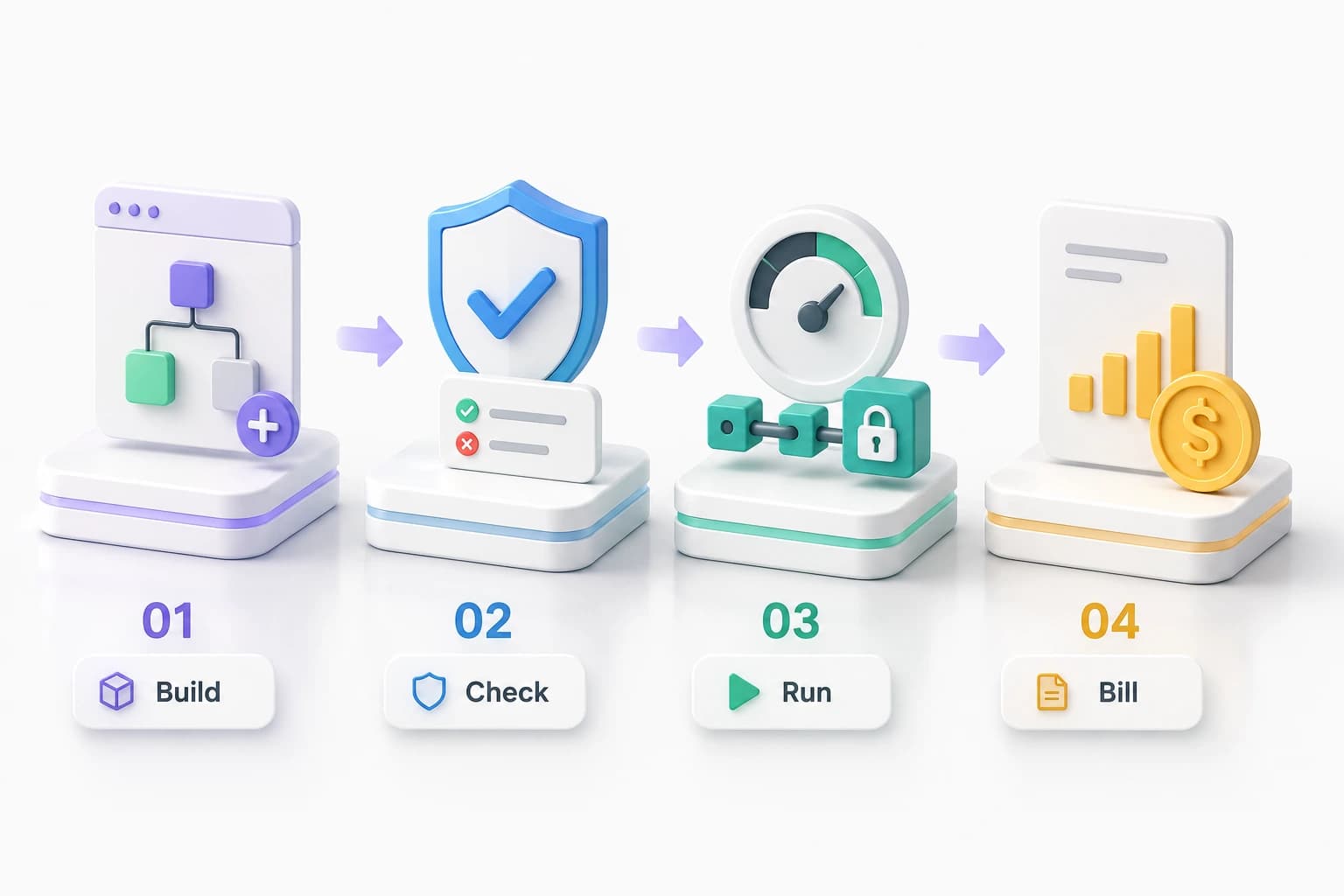
Every agent run passes a pre-call credit check. Declined off-policy requests spend zero tokens. Approved runs write idempotent usage events — replay-safe, audit-ready, and transparent in your ledger.
Build — Design and validate agents on any plan — zero AI required to ship the canvas.
Check — Runtime verifies credits and policy before the first token is spent.
Run — Executions meter usage in real time with hash-chained provenance.
Bill — Credits reconcile to a transparent ledger your finance team can trust.
How credits map to usage
Typical agent turn — Credits scale with model tier and token length — lighter models and shorter prompts cost less than frontier models.
RAG-grounded answer — Retrieval plus generation meters as one governed run. Off-policy or ungrounded declines spend zero credits.
Multi-step workflow — Each model call in a graph is checked before spend; failed policy gates never burn tokens mid-run.
Finance-ready ledger — Usage events are idempotent and tied to your tenant rate table — finance sees cost before runs complete.
Illustrative of how usage maps to credits. Actual rates depend on model routing and your tenant rate table.
ENTERPRISE
Deploy governed agents on your terms
Pro and Max get teams building fast. Enterprise is for organizations that need unlimited footprint, directory-native identity, deployment inside your perimeter, and a partner team accountable to your SLA — on the same governed runtime described across the rest of this page.
COMPARE
Max vs Enterprise
Max is the top plan you can buy online. Enterprise is for companies that need unlimited seats, directory sync, and a contract legal will sign.
Uncapped seats, environments, agents, and Distribute publishing — built for division-wide and global rollouts, not a single team pod.
Your perimeter
Pin data residency, choose BYOC or on-prem, and run air-gapped when egress must be zero. Connector secrets stay in your vault, not ours.
Directory-native access
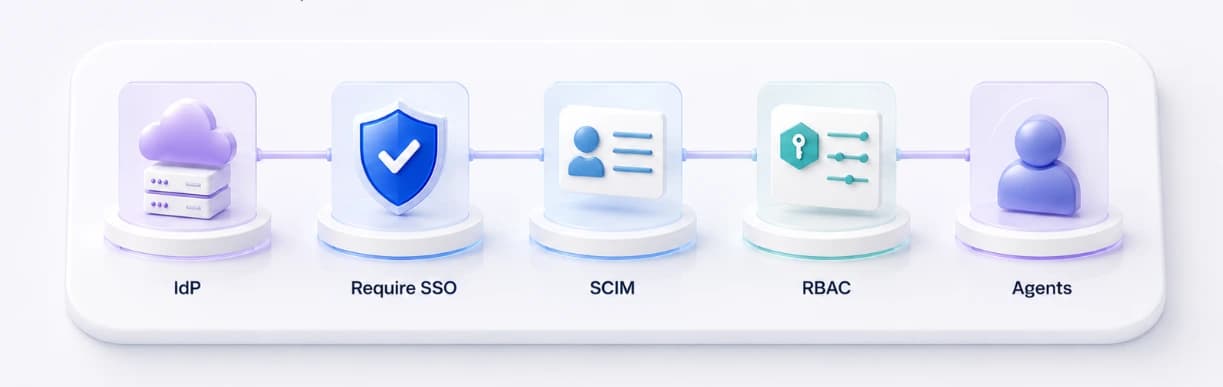
SSO with Azure AD, Okta, Google, and Ping. SCIM auto-provisions users. Require SSO org-wide. Custom RBAC maps your IdP groups to build and run.
Assurance by contract
A negotiated uptime SLA, dedicated CSM and TAM, audit export to your SIEM, and a security documentation pack for your review cycle.
DEPLOYMENT
Runs where SaaS alone is not enough
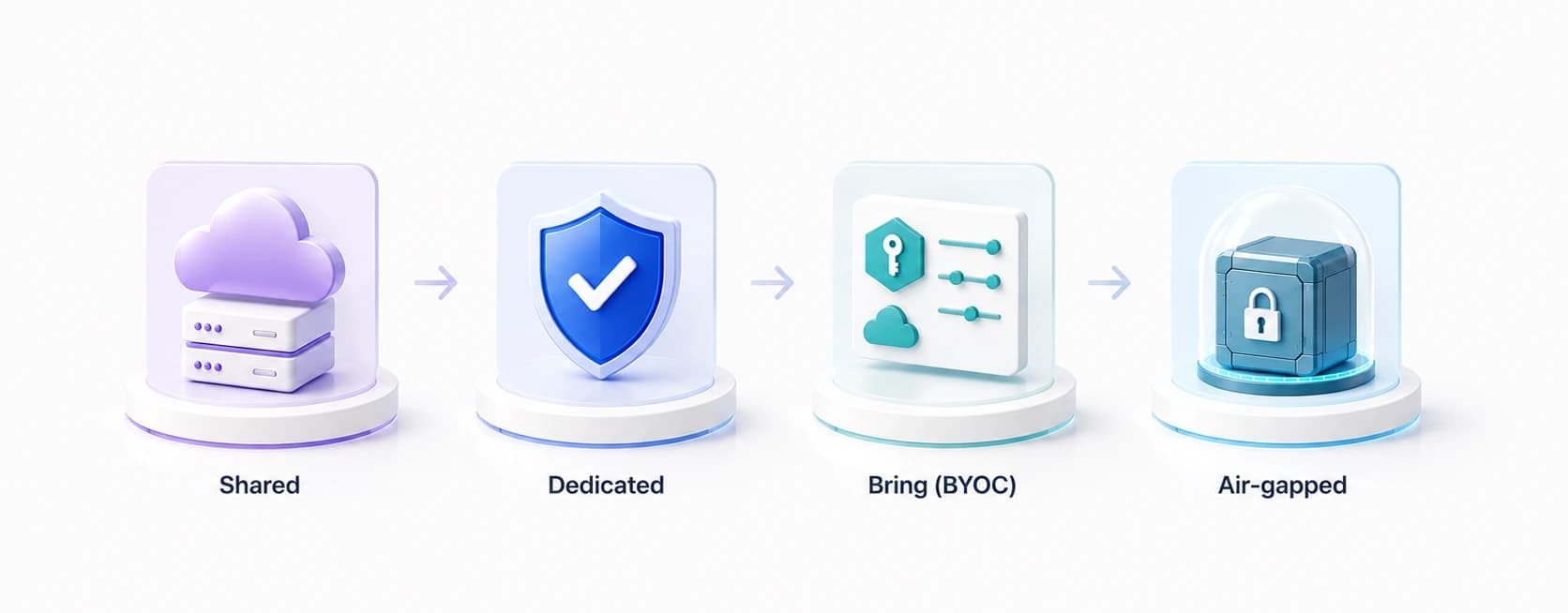
Start in shared cloud and graduate to dedicated, BYOC, or fully air-gapped deployment as risk demands — same governance model in every mode.
Shared SaaS — Fastest path to value. Governed agents on Nuroen-managed infrastructure with standard regional hosting.
Dedicated — Isolated compute and storage for your org. Stronger boundary without operating your own stack.
Bring your own cloud — Run inside your AWS, Azure, or GCP account. Your network policies, your egress controls, your audit scope.
Air-gapped / on-prem — Zero outbound egress. Sovereign models such as Venus run entirely inside your walls when external routing must be disabled.
IDENTITY & ACCESS
Onboard the whole organization, not one team
Enterprise connects to the identity systems you already operate — and enforces access server-side, not in the UI.
SAML & OIDC federation — Azure AD, Okta, Google Workspace, Ping Identity, and generic SAML.
SCIM 2.0 provisioning — Auto-add and auto-remove users and groups from your directory. Enterprise-only — not available on Max.
Require SSO — Block password login org-wide. No shadow accounts outside your IdP.
Custom org RBAC — Map IdP groups to build, approve, execute, and monitor permissions. Custom roles for regulated separation of duties.
Workspace SSO mappings — Tie identity claims to the right workspaces and environments at scale.
Break-glass controls — Enforce 2FA for non-SSO admin accounts used only in emergencies.
ASSURANCE
Evidence your audit team can actually use
Enterprise buyers need artifacts — not marketing promises. Nuroen ships operational surfaces your security and compliance teams can inspect, export, and attach to controls.
Trust & Risk Center — Org-wide trust score, policy compliance breakdown, open findings, and pending approvals in one operations view — not scattered logs.
Audit export & SIEM integration — Export tamper-evident run history and admin events to your SIEM or archival store. Custom retention windows for regulated record-keeping.
Contractual SLA — Enterprise includes an uptime commitment agreed in your contract, escalation paths, and 24/7 support — backed by a named CSM and TAM.
Security documentation pack — Architecture overview, data-flow diagram, subprocessors list, and questionnaire responses available on request for your vendor review.
ROLLOUT
From security review to org-wide production
Enterprise customers follow a structured path — designed for regulated buy cycles, not "sign up and hope."
1. Security review — Share your architecture questionnaire. We provide data-flow diagrams, deployment options, and subprocessors documentation for InfoSec sign-off.
2. Governed pilot — One high-value use case, one environment, explicit success criteria. Prove governance, cost predictability, and audit evidence before broad rollout.
3. Production hardening — Enable SCIM, residency pins, vault backend, SSO enforcement, and SLA. Connect production systems with governed connectors and approval gates.
4. Org-wide scale — Multi-team workspaces, certified marketplace templates, IDE sync for power builders, and volume credit pools across business units.
INDUSTRY FIT
Built for regulated environments
Banking, healthcare, insurance, manufacturing, and public sector teams deploy Nuroen with residency, approval gates, and strict knowledge boundaries.